Billboards, Brainwaves, and Behaviour: The Architecture of Iconic Ads
If you’ve spent any time in the modern digital landscape, you know that marketing can sometimes feel like trying to herd cats. Between the algorithms, the AI bots, and the endless stream of content, the digital noise is deafening.
It is incredibly easy to get caught up in the "how" of pushing a product and completely forget the "why." But if we look back at the greatest advertising masterstrokes in history, they didn't just sell things. They sold a feeling. They started a conversation. And in the best cases, they permanently rewrote human behaviour.
At Digitally Correct, we are constantly navigating the balancing act between cutting-edge tech and authentic human storytelling. So, we decided to take a step back and dissect the DNA of the campaigns that actually changed the world.
We call it the Playbook Architecture.
Whether it's a vintage print poster or a modern multi-channel digital rollout, every truly legendary campaign follows a specific, three-step rhythm.
Node 1: The Friction
Standard marketing usually tries to gloss over the awkward stuff. Iconic marketing runs straight at it. The Friction is the cultural tension, the brand crisis, or the outdated image standing in your way.
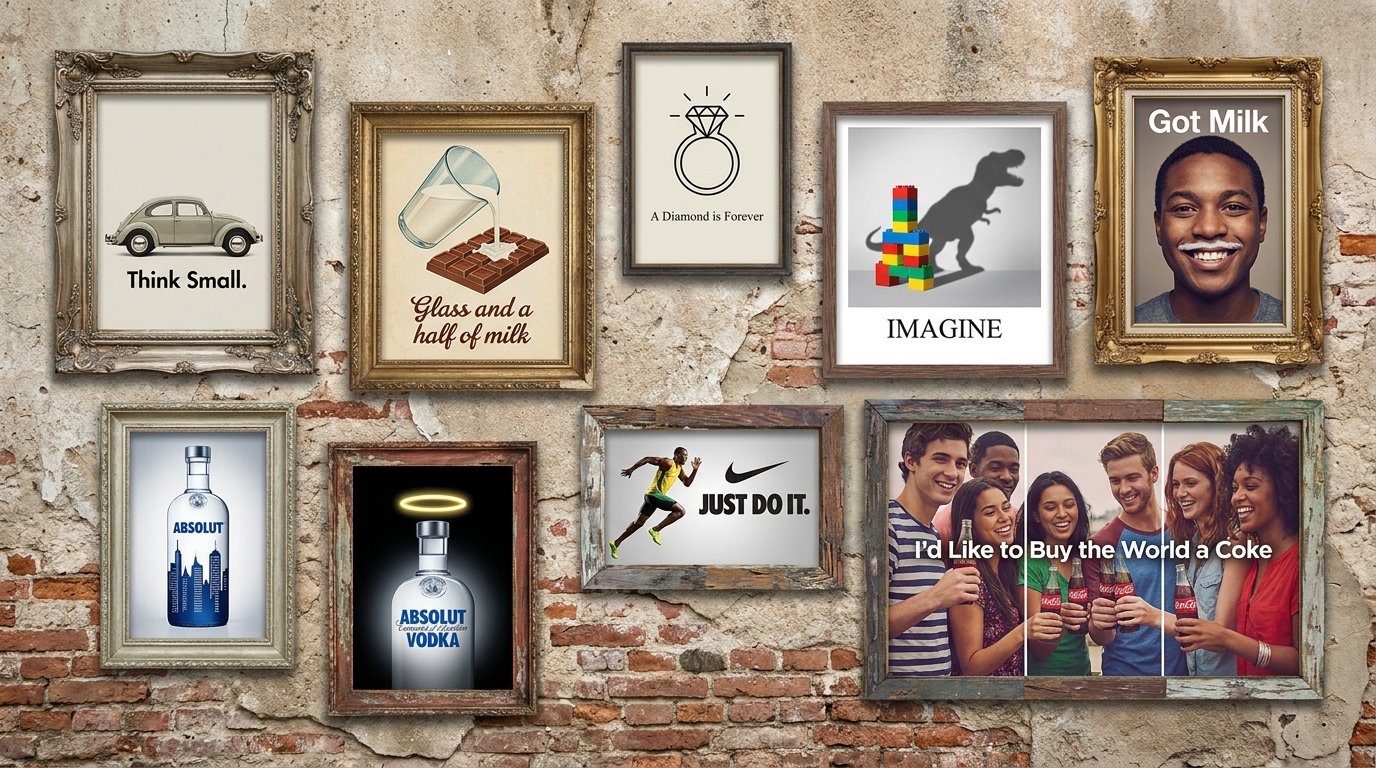
Think about Volkswagen in 1960. American car manufacturers were obsessed with massive, flashy vehicles adorned with giant tailfins. VW was trying to sell a tiny, highly unusual German car to that exact market. That is a massive friction point.
Node 2: The Spark
This is the bold, unconventional, and often entirely illogical creative leap. It’s the moment you stop trying to blend in and start using your weakness as a weapon.
Or look at De Beers in 1947. Following the Great Depression, diamond sales were at an all-time low (The Friction). The Spark? Copywriter Frances Gerety coined the phrase “A Diamond is Forever,” positioning the stone not just as a piece of jewellery, but as an eternal promise.
Node 3: The Shockwave
A good ad campaign bumps your quarterly sales. A brilliant ad campaign creates a Shockwave—a permanent shift in consumer behaviour, global culture, or how a brand is perceived.
VW’s "Think Small" birthed the modern era of self-aware, minimalist marketing. It reframed a supposed weakness into the ultimate advantage for practical drivers.
De Beers? Their Shockwave was even bigger. They took an equation—[Physical Durability of Diamond] + [Strategic Copywriting]—and literally invented the modern global tradition of the diamond engagement ring.
The Balancing Act
We might not be dealing with 1960s newspaper placements anymore. Today, we are navigating SEO, social media algorithms, and AI-driven solutions. But the architecture of human connection remains exactly the same.
You need human insight to find your Friction, the creative guts to light the Spark, and the strategic digital execution to deliver the Shockwave.
Stop Shouting Into the Void.
If your current marketing strategy is feeling a little too focused on pushing a product and not focused enough on starting a movement, let's talk. We're always down to grab a coffee and figure out how to help your brand cut through the noise.
Let's Build Your Shockwave